🧊 Refrigerator Removal & Disposal Guide
1. Description of the Item
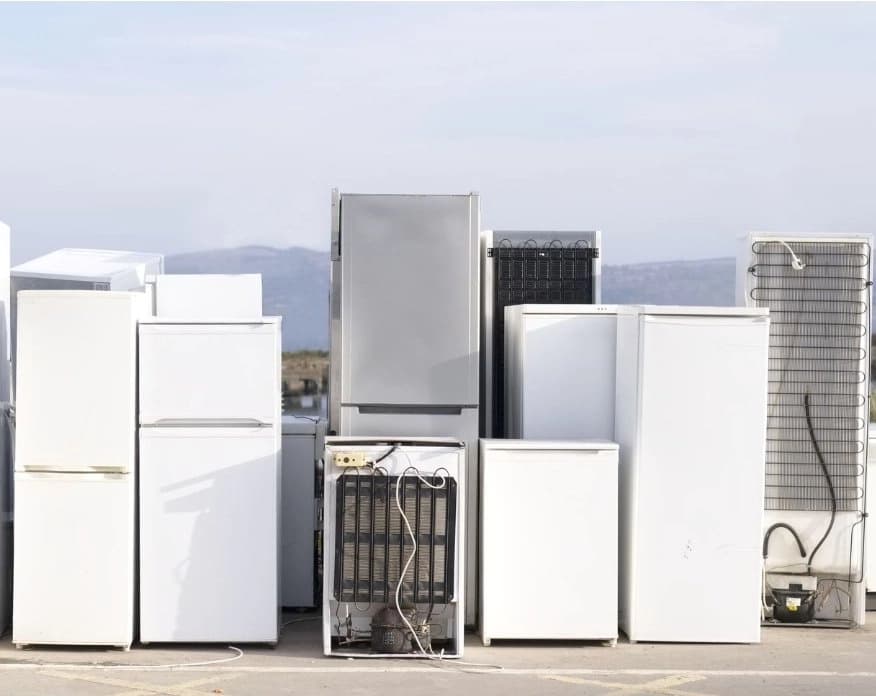
Refrigerators are large household appliances designed to keep food cold or frozen. They are built with metal frames, insulated plastic panels, compressors, and refrigerants such as Freon or R-134a. Because refrigerants are environmentally hazardous, refrigerators must be handled and recycled through certified facilities to prevent chemical leaks and contamination.
2. Safe Removal Process
- Unplug the refrigerator at least 24 hours before removal.
- Defrost completely and remove all food, shelves, and drawers.
- Secure doors with tape or rope to prevent swinging.
- Protect floors with cardboard or moving blankets.
- Use a dolly and at least two people for lifting.
- Keep the refrigerator upright to protect the compressor.
- Secure the unit inside the vehicle during transport.
3. Proper Disposal & Recycling
- ♻️ Certified recycling facilities recover refrigerants safely.
- 🔌 Utility rebate programs may accept working refrigerators.
- 🚛 Professional removal ensures EPA-compliant handling.
- 🚫 Dumping or cutting open refrigerators is illegal.
4. Average Weight by Type
| Refrigerator Type | Weight (lbs) | Weight (kg) |
|---|
| Mini Fridge | 35–60 | 16–27 |
| Top Freezer | 150–200 | 68–91 |
| Bottom Freezer | 200–250 | 91–113 |
| Side-by-Side | 250–350 | 113–159 |
| French Door | 300–450 | 136–204 |
| Commercial Unit | 400–800 | 181–363 |
5. Typical Dimensions
| Type | Inches | Centimeters |
|---|
| Mini Fridge | 20" x 18" x 34" | 51 x 46 x 86 cm |
| Top Freezer | 30" x 32" x 66" | 76 x 81 x 168 cm |
| Bottom Freezer | 33" x 34" x 70" | 84 x 86 x 178 cm |
| Side-by-Side | 36" x 34" x 70" | 91 x 86 x 178 cm |
| French Door | 36" x 35" x 70" | 91 x 89 x 178 cm |
6. Why Choose Professional Refrigerator Removal
- EPA-compliant refrigerant recovery.
- Safe lifting and transport of heavy appliances.
- Environmentally responsible recycling.
- No risk of fines or environmental damage.
- Fast, hassle-free pickup.